


 Share on Facebook
 Share on LinkedIn
 Share on X
 Share on Pinterest
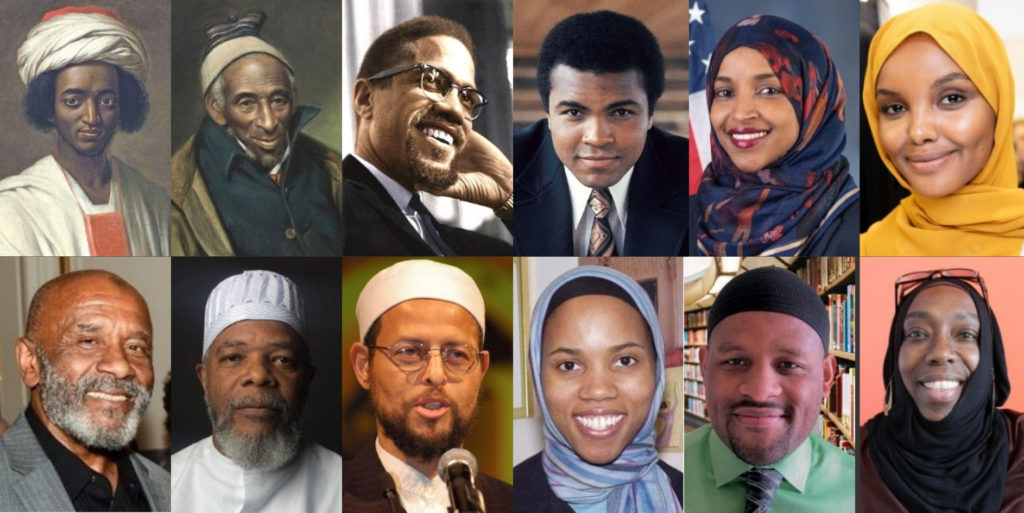
Black American Muslims constitute a significant and diverse segment within the broader Muslim community in the United States. Their history and experiences are unique, often shaped by a combination of African heritage, the legacy of slavery, and the diverse cultural landscape of the United States. Here are some key aspects related to Black American Muslims:
-
Conversion and Legacy:
- Many Black Americans have converted to Islam, drawn by a variety of factors, including spiritual seeking, social justice, and a desire for a connection to their African heritage. Some of the prominent figures in the early spread of Islam among Black Americans include Malcolm X and Muhammad Ali.
-
Islamic Movements:
- The Nation of Islam, though distinct from mainstream Islam, played a crucial role in the early spread of Islam among Black Americans. Over time, many followers of the Nation of Islam transitioned to Sunni Islam or other branches.
-
Sunni Islam:
- The majority of Black American Muslims identify with Sunni Islam, and they often affiliate with various schools of thought within Sunni tradition. Sunni mosques and communities are widespread, contributing to the religious diversity within the Muslim population in the U.S.
-
Cultural Expression:
- Black American Muslims have contributed significantly to the cultural and artistic landscape of the Muslim community. Their expressions of Islam often incorporate elements of African and African American culture, influencing music, art, and literature.
-
Social Justice Advocacy:
- Black American Muslims have historically been at the forefront of social justice movements. Leaders like Malcolm X emphasized the importance of justice and equality, and contemporary Black American Muslim activists continue to play crucial roles in movements addressing racial and social issues.
-
Community Leadership:
- Black American Muslims hold leadership positions within mosques, Islamic organizations, and community initiatives. Their contributions are integral to the development and growth of the Muslim community in the U.S.
-
Diverse Identities:
- Black American Muslims, like any community, are diverse in their ethnic backgrounds, cultural practices, and interpretations of Islam. They may identify with various ethnicities, including African, Afro-Caribbean, or African American, contributing to the rich tapestry of the Muslim American experience.
-
Educational Institutions:
- Black American Muslims have been involved in establishing educational institutions, including Islamic schools and community centers, to provide religious education and cultural preservation.
Overall, the presence of Black American Muslims is essential to the vibrancy and diversity of the American Muslim community, contributing not only to the religious landscape but also to the broader cultural, social, and political fabric of the United States.
The Nation of Islam (NOI) is a religious and social movement that originated in the United States during the early 20th century. It is distinct from mainstream Islam and has a unique set of beliefs and practices. Here are key aspects of the Nation of Islam:
-
Founding:
- The Nation of Islam was founded in Detroit, Michigan, in 1930 by Wallace D. Fard, who is often referred to as Master Fard Muhammad. The movement's early leadership included Elijah Muhammad, who succeeded Fard and played a central role in shaping the organization.
-
Beliefs:
- The Nation of Islam incorporates elements of Islam but has unique theological beliefs. It teaches that Fard is Allah (God) in person and that Elijah Muhammad is His last and greatest prophet. These beliefs differ significantly from traditional Islamic theology.
-
Teachings and Doctrine:
- The Nation of Islam teaches a message of black empowerment, self-reliance, and the establishment of a separate nation for African Americans. It emphasizes economic independence, education, and moral reform.
-
Social Justice and Activism:
- The Nation of Islam has been involved in social justice and civil rights activism. Leaders such as Malcolm X were prominent figures in the struggle for civil rights and racial equality during the 1950s and 1960s.
-
Leadership Transition:
- After the death of Elijah Muhammad in 1975, his son Warith Deen Mohammed led a significant transformation within the Nation of Islam. He moved the organization toward mainstream Sunni Islam and disavowed many of the distinctive teachings of his father.
-
Farrakhan's Leadership:
- Louis Farrakhan emerged as a prominent leader within the Nation of Islam and took over its leadership in 1977. Under Farrakhan's leadership, the organization has retained its unique theological beliefs and has continued to address social issues, including racial inequality and injustice.
-
Controversies:
- The Nation of Islam has been associated with controversies, including its teachings on race, its criticism of mainstream Islam, and occasional statements that have been considered inflammatory. These factors have led to a complex relationship with other Muslim communities.
-
Economic Initiatives:
- The Nation of Islam has been involved in various economic initiatives, including the establishment of businesses and farms, aiming to promote economic self-sufficiency within the African American community.